 Neoclouds
 Neocloud Users
 AI Data Centers
 Enterprise Data Centers
 Visibility & Posture
 Verify Rented Capacity
 Risk Prioritization & Hardening
 Red Teaming & Pen Testing
 Runtime Detection & Response
 Compliance & Audit Readiness
 Blog
 Learn
 FAQ
 BMC Exposure
 Learn



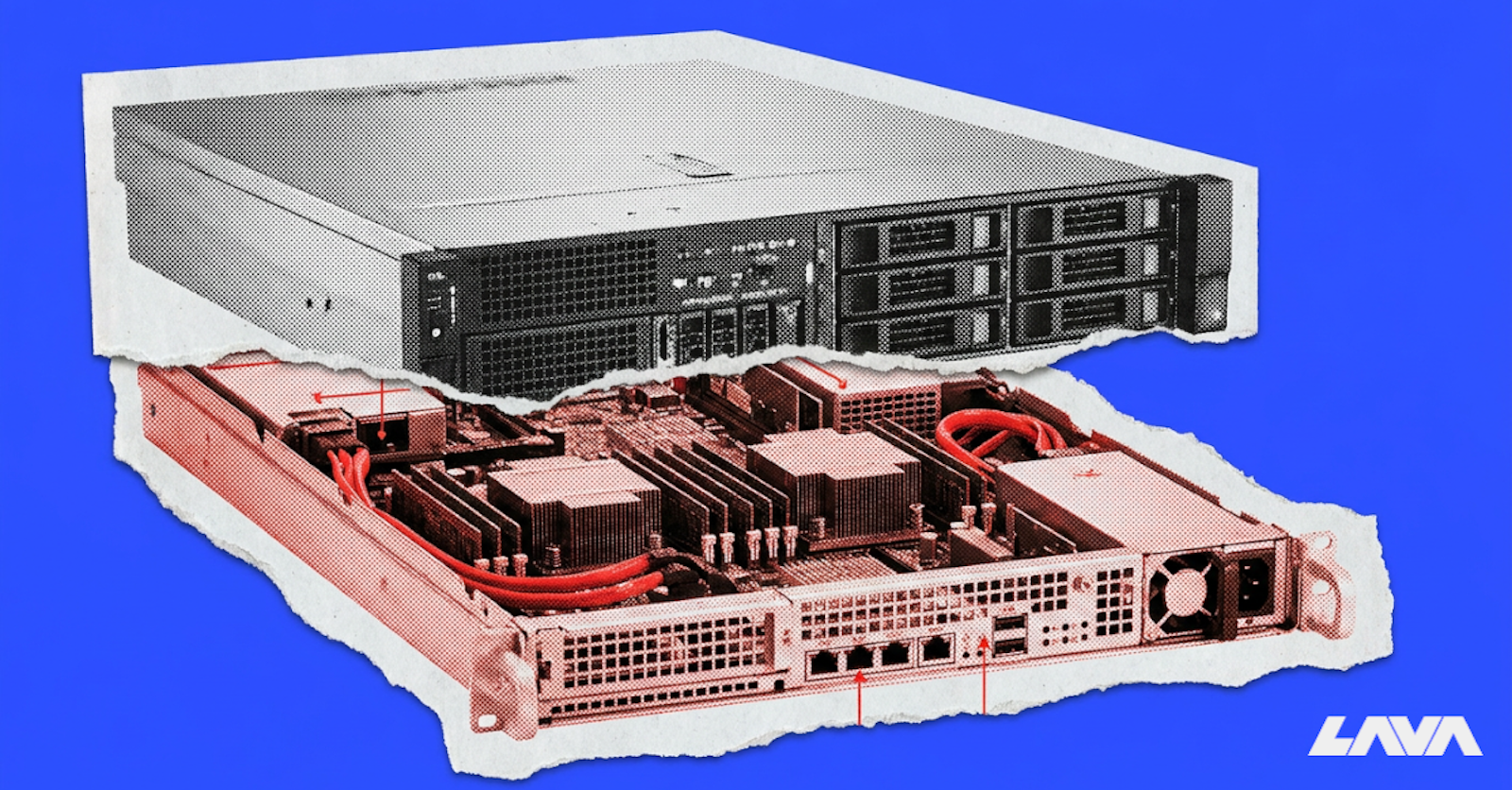
Most security tools were built for the layers above: the operating system, the application and the cloud control plane. This guide explains where today's attack surface sits, which capabilities matter in a data center security solution, and how nine leading options compare in 2027.
The Data Center Attack Surface in 2027
Attackers no longer stop at the operating system. The modern data center offers several layers to target:
Firmware and hardware. UEFI bootkits, malicious firmware implants and supply-chain tampering survive reimages and evade endpoint tools.
Out-of-band management. BMCs give full control over servers and often sit on poorly segmented management networks.
Network and fabric. InfiniBand and RoCE fabrics that connect GPU clusters were designed for speed, not isolation.
Hosts and virtualization. Hypervisor escapes and misconfigured hosts let attackers move between workloads.
Tenants and shared infrastructure. In neoclouds, one tenant's foothold can become another tenant's breach if isolation fails.
These layers are connected. A single misconfigured BMC can open a path to the host, the fabric and other tenants. Effective data center security solutions show those paths, not just isolated findings. For more on why attackers are moving inside the data center, see The Next AI Attack May Happen Inside the Data Center.
Recent incidents show how quickly these risks become real. GPU cloud platforms have already faced breaches that touched infrastructure shared by many customers - read our analysis of the NVIDIA Brev breach for one example.
Key Capabilities to Look for in a Data Center Security Solution
Before choosing a solution, check it against these capabilities:
Full-stack inventory. Discovery of servers, BMCs, GPUs, NICs, DPUs, switches and storage, not just operating systems.
Hardware security and firmware integrity. Checks that firmware is authentic, signed and current.
Posture management. Detection of misconfigurations and drift against hardening baselines.
Isolation checks between tenants. Evidence that tenants cannot reach each other across compute, network and storage.
Attack path analysis. A connected view of how one weakness leads to another.
Runtime detection. Alerts on malicious activity as it happens, at every layer.
Deployment flexibility. SaaS, self-hosted and air-gapped options, with minimal agents on production hosts.
Weigh these capabilities against your environment. A traditional enterprise data center may get the most value from inventory and segmentation, while a GPU cloud needs firmware checks and tenant controls first. Ask each vendor for a proof of concept on your own hardware, since coverage of specific BMC, NIC and DPU models varies widely.
9 Best Data Center Security Solutions in 2027
Each entry covers what the solution does, its main features and where it fits best.
1. Lava
Lava is a data center security platform built for neoclouds, AI data centers and traditional on-prem environments. It connects to every layer, including BMC, network, GPU, fabric, storage, host and virtualization, and builds a real-time context graph of the infrastructure.
Firmware integrity and attestation across servers, GPUs, NICs and DPUs
Posture management against hardening baselines
Tenant isolation gap detection across compute, network and storage
Attack path analysis and runtime detection
SaaS, bring-your-own-cloud, on-prem and air-gapped deployment
Best for: neoclouds and AI data centers that need one connected view from firmware to tenants.
2. Eclypsium
Eclypsium provides firmware and hardware supply chain security for enterprise and AI data center infrastructure.
Hardware and firmware inventory, with a bill of materials per server
Firmware integrity and vulnerability checks, including BMCs and GPUs
Checks that hardware is clean before it is handed to the next customer
Best for: enterprises focused on device firmware and supply chain risk.
3. Binarly
Binarly offers firmware and software supply chain analysis, known for research into UEFI vulnerabilities.
Binary-level analysis of firmware, including BMC images
Detection of known and unknown vulnerabilities in firmware and software binaries
SBOM and cryptographic bill of materials for firmware and binaries
Best for: product security and research teams that analyze firmware binaries.
4. Cisco Hypershield
Cisco Hypershield provides distributed segmentation enforced in Cisco Smart Switches, as part of Cisco Hybrid Mesh Firewall.
Stateful segmentation at the top of the rack
Policy testing against observed traffic before enforcement
Central management through Cisco Security Cloud Control
Best for: organizations already standardized on Cisco networking.
5. Palo Alto Networks
Palo Alto Networks covers data center networks with next-generation firewalls and workloads with Cortex Cloud (formerly Prisma Cloud).
Data center and virtual firewalls (PA-Series, VM-Series)
Workload runtime protection and posture management in Cortex Cloud
Threat prevention and intrusion detection
Best for: teams that want network and workload protection from one vendor.
6. Fortinet
Fortinet provides high-throughput firewalls and segmentation designed for large data center networks.
Hyperscale data center firewalls
Network segmentation
Centralized management through its security fabric
Best for: high-throughput perimeter and internal segmentation in large data center networks.
7. Illumio
Illumio specializes in microsegmentation to contain lateral movement across hybrid data centers.
Application dependency mapping
Microsegmentation policy (Illumio Segmentation)
Breach detection and fast containment (Illumio Insights)
Best for: containing lateral movement across hybrid environments.
8. Akamai Guardicore Segmentation
Akamai Guardicore offers software-based segmentation with visibility into traffic between workloads.
Live map of traffic between workloads
Process-level segmentation policy
Coverage for legacy, OT and agentless devices
Best for: segmenting a mix of legacy and modern workloads.
9. NVIDIA BlueField and DOCA Argus
NVIDIA builds security into the infrastructure itself, running security services on BlueField networking platforms next to every AI node.
Agentless runtime threat detection with DOCA Argus, using memory forensics
Runs apart from the host, so it stays out of an attacker's reach if the host is compromised
Integration with SIEM, SOAR and XDR tools, plus partner firewalls that run on BlueField
Best for: AI factories built on NVIDIA hardware that want threat detection without host agents.
Data Center Security Solutions Compared
| Solution | Firmware & hardware security | BMC / out-of-band | GPU, NIC & DPU coverage | Tenant separation | Network segmentation | Runtime detection | Air-gapped / on-prem option |
|---|---|---|---|---|---|---|---|
| Lava | Yes | Yes | Yes | Yes | Visibility | Yes | Yes |
| Eclypsium | Yes | Yes | Partial | Partial | No | Partial | Yes |
| Binarly | Yes | Yes | Partial | No | No | No | Yes |
| Cisco Hypershield | No | No | Partial | Partial | Yes | Partial | No |
| Palo Alto Networks | No | No | Partial | Partial | Yes | Yes | Yes |
| Fortinet | No | No | Partial | Partial | Yes | Yes | Yes |
| Illumio | No | No | No | Partial | Yes | Partial | Yes |
| Akamai Guardicore | No | No | No | Partial | Yes | Partial | Yes |
| NVIDIA BlueField / DOCA Argus | No | No | Partial | Partial | Partial | Yes | Yes |
"Tenant separation" means checking that tenants in shared infrastructure cannot reach each other. Segmentation tools score Partial because they can enforce separation but do not validate it.
The main split is by layer. Firmware specialists like Eclypsium and Binarly go deep on hardware and BMCs but do not address networks or tenants. Segmentation and firewall vendors control traffic, and some now run on DPUs, but they do not see firmware or BMCs. Lava is the only option here that connects hardware, management, fabric and tenant layers in one graph.
Choosing a Solution for AI and Traditional Data Centers
Needs differ by environment:
AI data centers need coverage of GPUs, DPUs and InfiniBand or RoCE fabrics, plus firmware integrity for high-value hardware. Downtime is expensive, so agentless collection matters. Read more in Securing the Metal Beneath the Model.
Neoclouds must prove to customers and auditors that tenants are fully separated. Look for solutions that show isolation gaps across compute, network and storage, and that produce evidence for customer security reviews.
Traditional on-prem data centers often run mixed-age hardware from many vendors. Prioritize inventory, firmware lifecycle tracking and segmentation, and check that the solution can run fully on-prem or air-gapped.
Many organizations combine tools: a platform for hardware and infrastructure posture, plus a segmentation or firewall layer for traffic control. Neoclouds and their customers should also agree on who owns each layer - see Rethinking the Shared Responsibility Model for NeoCloud Security.
FAQs
How much do data center security solutions cost?
Pricing varies widely. Most vendors price per protected asset, such as servers, GPUs or devices, with annual subscriptions. Firewall vendors also price by throughput and hardware appliance. Enterprise deployments typically range from tens of thousands to several million dollars per year depending on fleet size. Ask vendors whether BMCs, NICs and switches count as separate billable assets.
Do data center security solutions work in air-gapped environments?
Some do. Solutions with on-prem or air-gapped deployment run entirely inside your network, with offline updates for vulnerability and firmware data. SaaS-only tools need internet connectivity and will not work. If you run classified, regulated or sovereign AI infrastructure, confirm air-gapped support and how threat intelligence updates are delivered.
Do data center security solutions need agents on servers?
It depends on the category. EDR and some segmentation tools require agents on each host. Hardware and firmware platforms can often collect data agentlessly through BMCs, Redfish and management APIs. Agentless collection reduces performance impact on GPU workloads and covers devices, such as switches and BMCs, where agents cannot run.
How long does a data center security deployment take?
Agentless platforms can deliver an initial inventory within days, since they connect to existing management interfaces. Agent-based tools take longer because each host needs installation and testing. Full segmentation projects often take months, because policies must be mapped and validated. Plan for a phased rollout starting with visibility.
Does physical security fall under data center security?
Yes, physical security is part of the broader discipline, covering access control, surveillance and environmental monitoring. However, the solutions in this list focus on cyber security of the infrastructure. Physical controls and cyber controls work together: physical access to a server can let an attacker flash firmware or plug into a management port.