 Neoclouds
 Neocloud Users
 AI Data Centers
 Enterprise Data Centers
 Visibility & Posture
 Verify Rented Capacity
 Risk Prioritization & Hardening
 Red Teaming & Pen Testing
 Runtime Detection & Response
 Compliance & Audit Readiness
 Blog



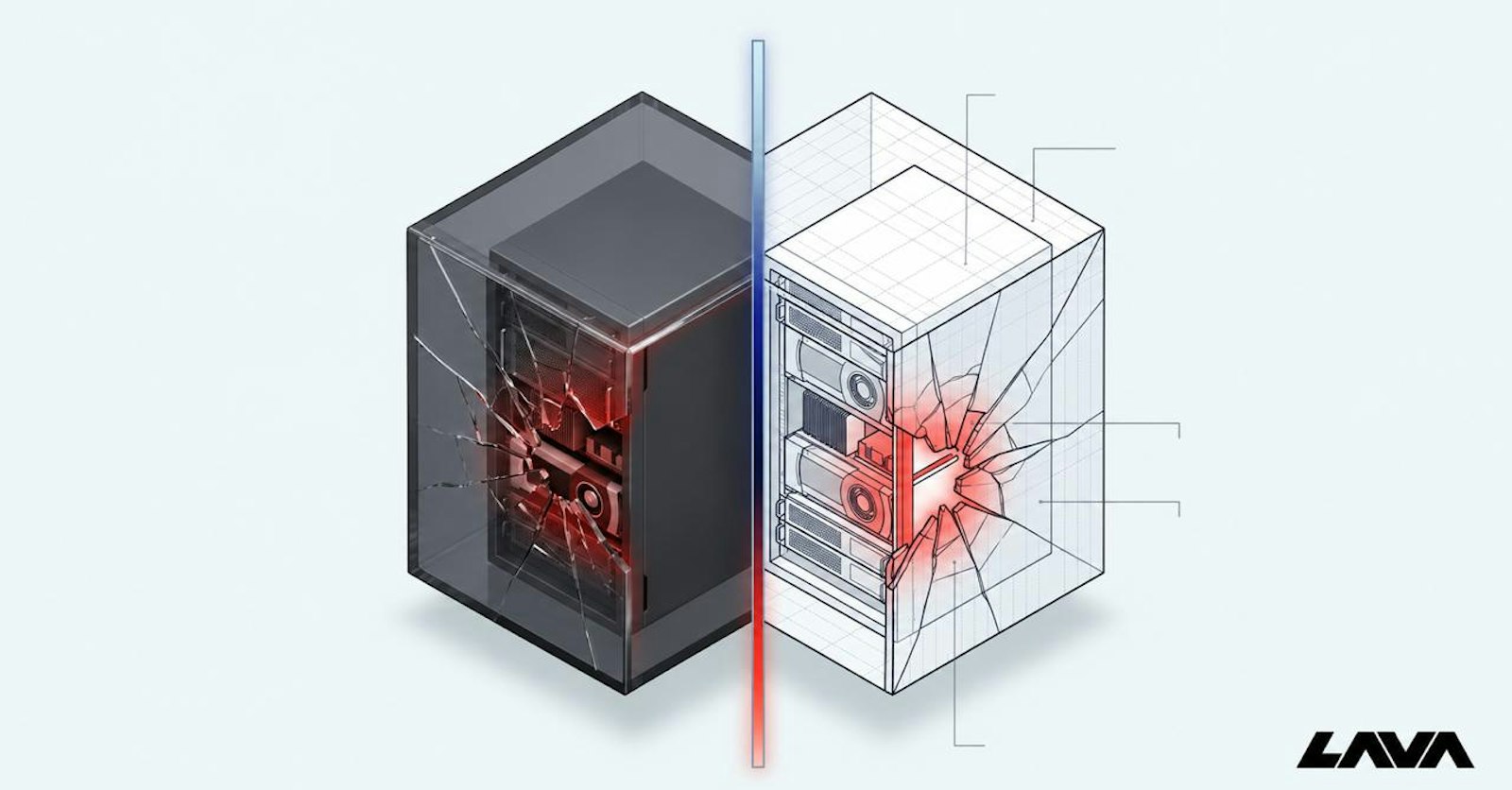
On October 31, 2026, NVIDIA reportedly notified users of a security breach affecting Brev, its GPU cloud development platform. SSH keys used to access GPU servers may have been exposed, potentially putting sensitive AI models, training data, and other information stored on those machines at risk.
What Is NVIDIA Brev?
NVIDIA Brev is a GPU cloud development platform acquired by NVIDIA in 2024. It allows developers to quickly provision GPU instances, configure development environments, and access remote machines without managing the underlying infrastructure.
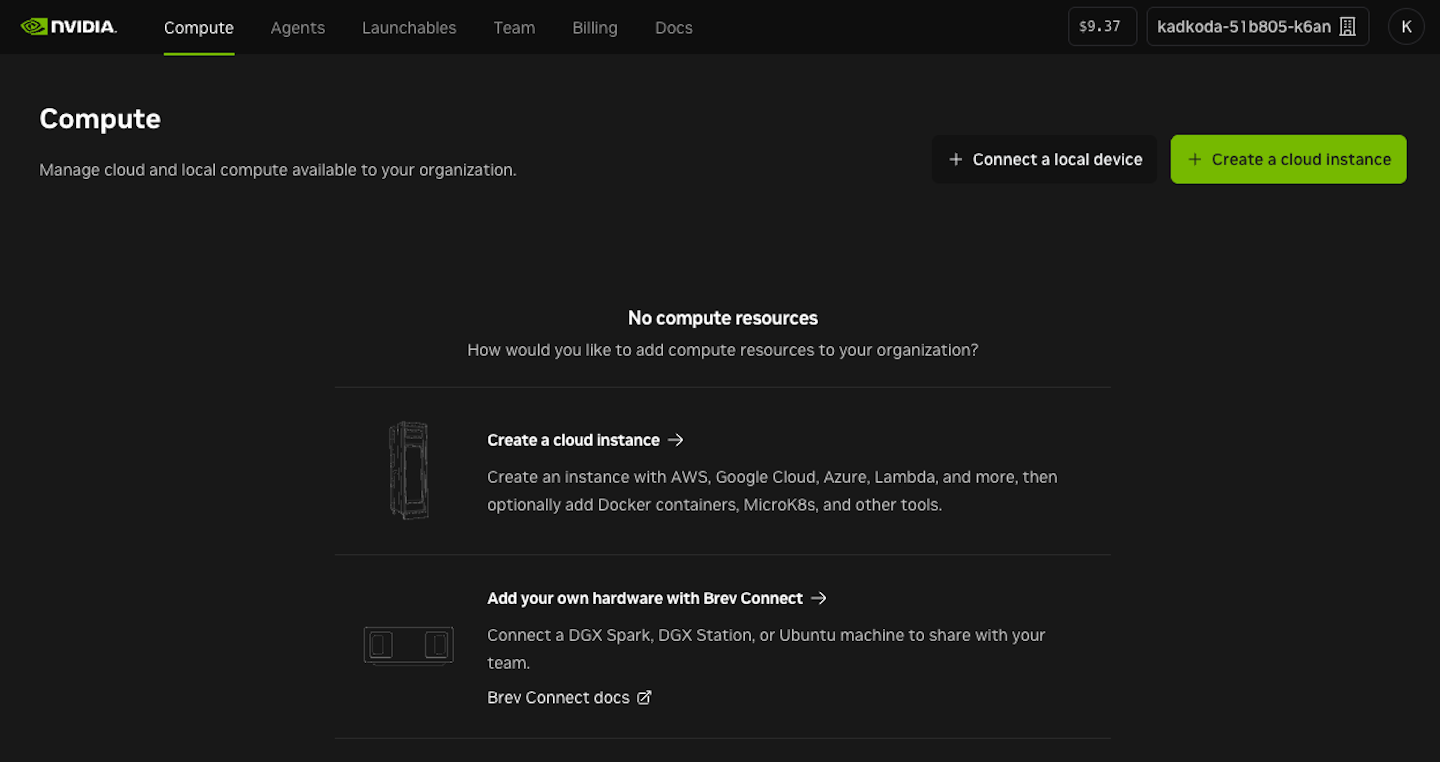
The platform works across multiple cloud and neocloud providers, including AWS, Google Cloud, Oracle Cloud, Lambda, Crusoe, Nebius, and more. Developers can launch a GPU instance and connect to it using a simple command such as brev shell <instance-name>.
Brev also offers Brev Connect, which allows users to register existing Linux machines, including on-premises GPU servers, and access them through Brev’s connectivity infrastructure. This makes Brev more than a provisioning platform: it also provides a centralized access layer to compute infrastructure distributed across different providers and environments.
What Happened?
According to NVIDIA’s notification, unauthorized activity affected the Brev platform between October 4 and October 20, 2026, potentially exposing SSH keys used to access customers’ GPU instances.
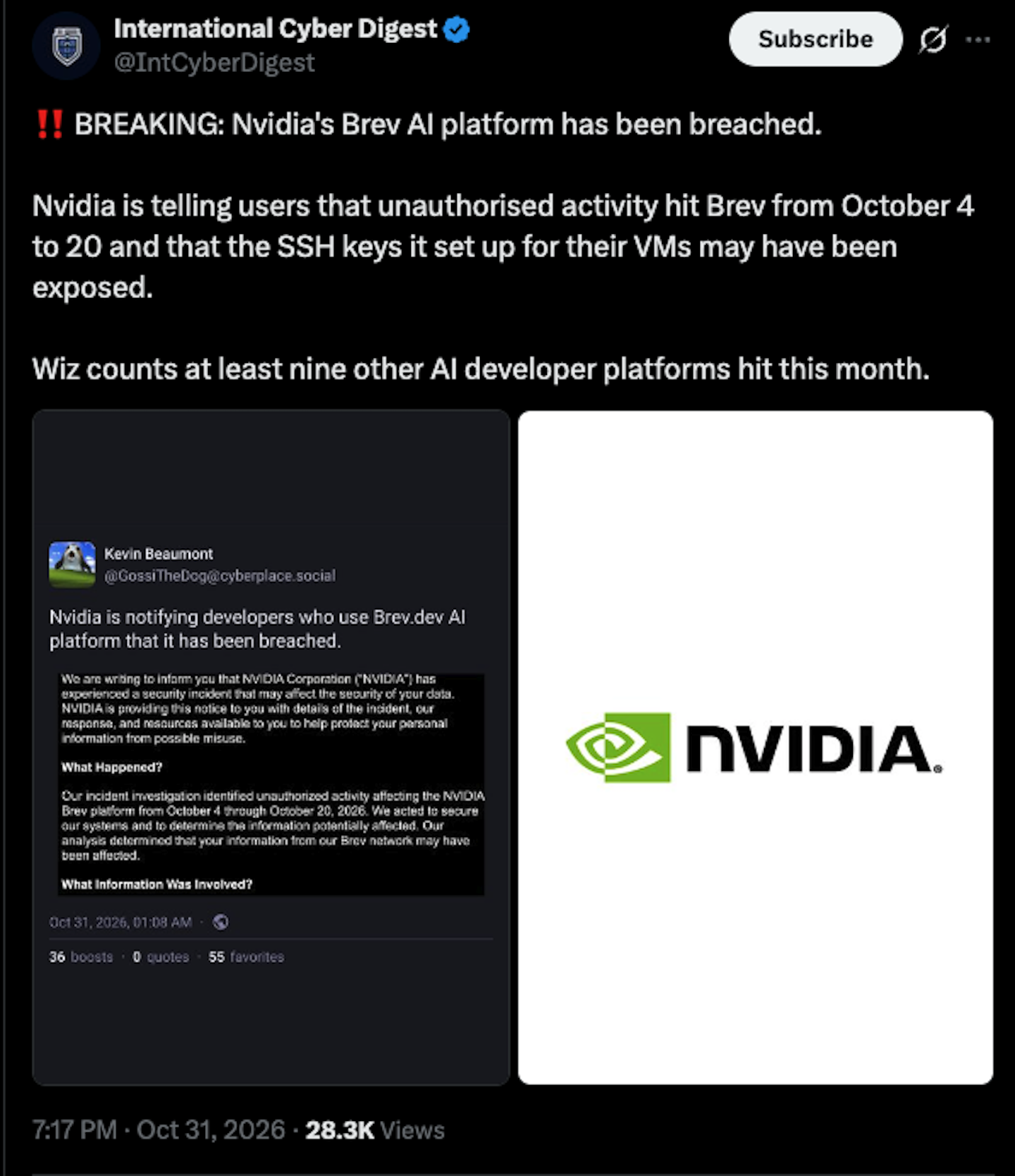
These keys could allow attackers to access GPU servers containing sensitive AI models, training datasets, source code, and cloud credentials.
The full scope of the incident remains unclear, including how many customers were affected and whether attackers actually accessed their GPU instances.
What Are the Potential Security Risks?
The impact depends on which machines the exposed credentials could access, the permissions associated with them, and the security controls protecting those environments.
Sensitive AI models and data: GPU instances frequently contain proprietary model weights, training datasets, source code, and other valuable intellectual property. Unauthorized access could expose these assets or allow attackers to exfiltrate sensitive information.
Credential theft: AI development environments often store cloud API keys, storage credentials, and tokens for external services in environment variables or configuration files. Access to these credentials could allow attackers to compromise additional resources beyond the original GPU instance.
Unauthorized GPU usage: Compromised GPU instances could be used to run unauthorized workloads, including cryptocurrency mining or other compute-intensive applications, potentially resulting in significant costs.
Persistence and lateral movement: Attackers with sufficient permissions could establish persistent access by modifying SSH configurations, adding users, or installing background services. Depending on network connectivity, they might also attempt to reach other compute nodes, shared storage, or infrastructure management services.
What Should Brev Customers Do?
The immediate priority for potentially affected customers is to follow NVIDIA’s remediation guidance and rotate any SSH credentials identified as exposed. However, replacing credentials is only the first step. Organizations also need to determine whether unauthorized access occurred and what activity took place on affected machines.
This includes reviewing SSH authentication logs and authorized keys, identifying suspicious processes or newly created users, checking for persistence mechanisms, and investigating unexpected network connections during and after the reported incident window.
Organizations should also assess whether sensitive credentials stored on potentially accessed machines need to be rotated, and whether those machines had access to additional compute nodes, storage systems, or management services.
What This Means for Neocloud and GPU Cloud Security
The Brev incident highlights a growing security challenge in AI infrastructure. Companies increasingly run sensitive AI workloads across neoclouds and GPU cloud providers, often relying on third-party platforms to provision and manage their environments.
Each additional platform introduces new credentials, access permissions, and potential attack paths. Yet customers often have limited visibility into who can access their GPU instances, what is happening inside them, or whether suspicious activity is taking place.
Securing NVIDIA Brev Environments with Lava
Following an incident involving potentially exposed SSH credentials, organizations need to understand whether their GPU servers were accessed, what activity took place, and whether attackers could reach additional compute nodes or sensitive infrastructure systems.
Lava supports integration with NVIDIA Brev and Brev Connect, helping organizations secure and monitor their GPU environments across neocloud providers. Lava helps detect suspicious activity, including unauthorized GPU usage, unexpected processes, and signs of persistence, while identifying security misconfigurations and attack paths that could allow attackers to move between GPU nodes, access sensitive storage, or reach infrastructure management systems.
Learn more about how Lava helps organizations secure AI workloads on neoclouds.