 Neoclouds
 Neocloud Users
 AI Data Centers
 Enterprise Data Centers
 Visibility & Posture
 Verify Rented Capacity
 Risk Prioritization & Hardening
 Red Teaming & Pen Testing
 Runtime Detection & Response
 Compliance & Audit Readiness
 Blog
 Learn
 FAQ
 BMC Exposure
 Learn



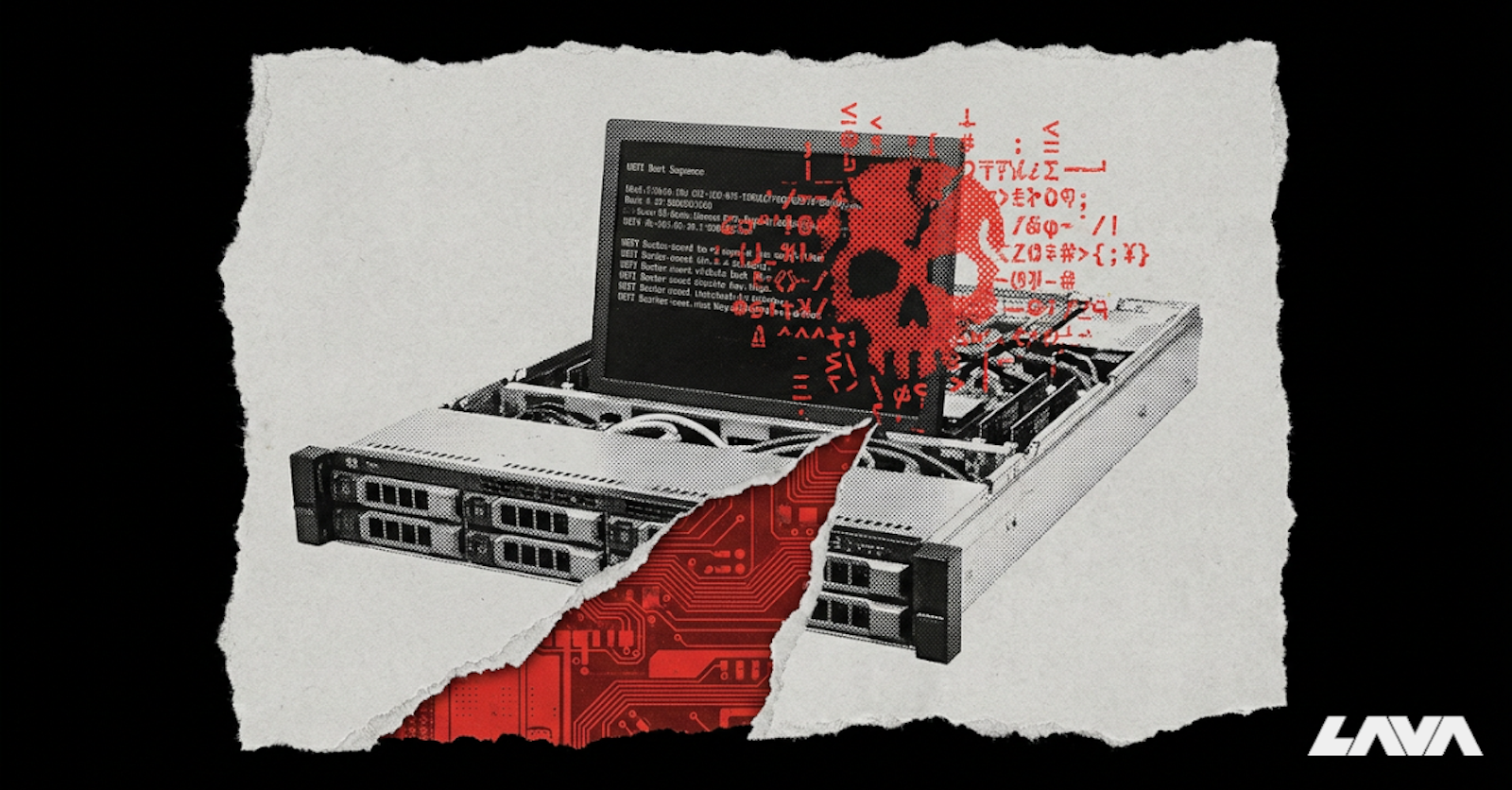
Secure Boot is the main protection against this class of attack. It checks that every piece of code in the boot process is signed by a trusted party before it runs. This article explains how Secure Boot works, which attacks it stops, where it has been bypassed, and how to keep it effective across a server fleet.
How Secure Boot Verifies Each Stage of Startup
Secure Boot is part of the UEFI specification. It relies on a set of keys and databases stored in firmware:
Platform Key (PK): owned by the hardware vendor - controls changes to the key exchange keys.
Key Exchange Keys (KEK): authorize updates to the signature databases.
Signature database (DB): certificates and hashes of code allowed to run.
Forbidden signature database (DBX): revoked certificates and hashes of code known to be unsafe.
When a server powers on, the boot process follows a chain of trust:
The firmware's core initializes the hardware and verifies its own components.
Before running each UEFI driver or option ROM, such as those on network or storage cards, the firmware checks its signature against DB and DBX.
The firmware verifies the bootloader. On Linux, this is usually a small signed loader called shim, which then verifies GRUB.
The bootloader verifies the operating system kernel.
The kernel can then enforce signature checks on drivers and modules.
If any stage fails the check, the boot stops. Each link vouches for the next, so an attacker must break or bypass one link to insert malicious code.
On servers, this process is longer than on laptops. Each add-in card, such as a GPU, NIC or RAID controller, may bring its own option ROM, and every one must be signed by a trusted key. A single unsigned or outdated option ROM can stop a server from booting once Secure Boot is on, which is one reason teams leave it off.
Boot-Level Attacks That Target Servers
Boot-level attacks are valued because they run first and persist. The main types include:
Bootkits. Malicious code that replaces or patches the bootloader to take control before the operating system. BlackLotus, discovered in 2023, was the first public UEFI threat able to bypass Secure Boot on fully patched Windows systems.
UEFI firmware implants. Malware written into the SPI flash chip, such as MoonBounce and CosmicStrand. These survive even a disk replacement.
Malicious option ROMs. Code on add-in cards that the firmware runs during startup.
Linux boot threats. A proof of concept reported in late 2024 showed that Linux servers are a target too.
Once in place, boot-level malware can disable security features, hide processes and files, and load further malware with the highest privilege. Firmware implants are especially hard to detect and remove, as covered in Breaking the Trust: Firmware Compromise in Modern Infrastructure. For a broader view of attacks below the operating system, see The Runtime Gap: Runtime Attacks in Modern Infrastructure.
Known Secure Boot Bypasses and What They Exploited
Secure Boot is only as strong as the code it trusts and the keys it relies on. Recent bypasses show the main weak points.
BootHole (2020). A buffer overflow in GRUB2's configuration parser let attackers run code during boot. Because GRUB was signed, the flaw affected nearly every Linux distribution, plus Windows systems that trust Microsoft's third-party UEFI certificate.
BlackLotus / Baton Drop (2022–2023). Exploited a Windows boot manager flaw (CVE-2022-21894). Old, vulnerable boot managers were still signed and not revoked, so attackers could bring their own.
PKfail (2024). Researchers at Binarly found that hundreds of device models shipped with untrusted AMI test Platform Keys, and the private half of at least one had leaked online. Anyone with that key could sign code the firmware would trust.
LogoFAIL (2023). Image-parsing flaws in UEFI firmware let a malicious boot logo run code before Secure Boot checks applied.
Signed third-party loaders (2025). A signed recovery tool from Howyar Technologies, also bundled by several other vendors, loaded unsigned code, giving attackers a trusted path around Secure Boot (CVE-2024-7344).
The common thread: Secure Boot trusts signatures, not behavior. A signed component with a bug, or a leaked key, breaks the chain. Revoking vulnerable components quickly is as important as signing good ones.
For defenders, this means two kinds of work. Patching fixes the flaw in the vulnerable component, and revocation stops attackers from loading old, still-signed copies of it. Without both, a fixed bug can still be exploited for years.
Secure Boot vs. Measured Boot
The two features solve different problems.
Secure Boot enforces. It stops code that is not signed by a trusted key. Its weakness is that it cannot detect a signed but vulnerable or malicious component.
Measured boot records. At each stage, the firmware and bootloader hash the next component and store the measurement in the Trusted Platform Module (TPM). The result is a tamper-evident log of exactly what ran.
Those measurements support remote attestation: a server proves to an outside system what it booted, and the verifier compares the results against a known-good baseline. If a bootloader was swapped or firmware changed, attestation fails, even if Secure Boot allowed it.
In a fleet, attestation results can feed directly into access decisions. A server that fails attestation can be kept out of a cluster or tenant pool until it is checked, instead of quietly running workloads on firmware no one trusts.
Servers often use both. Secure Boot blocks the obvious attacks - TPM measurements and attestation catch what slips through and give security teams evidence of firmware integrity. To learn more about firmware trust, see Breaking the Trust: Introducing Firmware Integrity.
Keeping Secure Boot Effective Across a Server Fleet
Turning Secure Boot on is not enough. It needs ongoing maintenance:
Verify it is enabled. Many servers ship with Secure Boot off, or are set to setup mode during troubleshooting and never reset. Check state across every server, not just a sample.
Keep DBX current. Apply revocation updates as vendors and operating systems release them, so known-vulnerable bootloaders stop running.
Plan certificate rotation. Microsoft's original 2011 Secure Boot certificates expired between June and October 2026. Servers must trust the newer certificates to keep receiving signed boot updates.
Replace test and default keys. Check that no server uses a known test Platform Key.
Control option ROMs. Limit which add-in card firmware the system trusts.
Pair with attestation. Use TPM measurements to confirm what each server actually booted.
Update firmware. Many bypasses live in the firmware itself, so firmware patching and Secure Boot go together.
Across thousands of servers, these checks must be automated. A fleet-wide view of Secure Boot state, key databases and firmware versions turns a checklist into a measurable control.
Treat Secure Boot state as part of configuration drift. Servers swapped under RMA, reflashed during troubleshooting or provisioned from an old image are the most likely to fall out of policy. Flag them automatically and bring them back to the baseline before they return to production.
FAQs
Does Secure Boot slow down server startup?
The impact is negligible. Signature checks take milliseconds compared with the minutes a server spends on memory training and device initialization. Most teams see no measurable change in boot time. Recording boot measurements in the TPM adds similarly small overhead. Neither feature affects performance once the operating system is running.
Can Secure Boot be enabled on existing servers?
Yes, on most servers built in the last decade, as long as they boot in UEFI mode rather than legacy BIOS mode. Switching from legacy to UEFI may require repartitioning the boot disk. Test custom kernels, drivers and add-in cards first, since unsigned components will fail to load once Secure Boot is on.
Does Secure Boot work with Linux servers?
Yes. Major distributions such as Red Hat Enterprise Linux, Ubuntu, SUSE and Debian support Secure Boot through the signed shim loader. Custom kernel modules, such as some GPU or storage drivers, must be signed with a key the system trusts, usually enrolled as a Machine Owner Key (MOK).
Is Secure Boot required for compliance standards?
Some frameworks reference it directly or indirectly. NIST SP 800-193 covers platform firmware resiliency, and U.S. federal guidance encourages Secure Boot. Others, such as PCI DSS and SOC 2, require system integrity controls that Secure Boot helps satisfy. Check the specific requirements of each framework you follow.
Does Secure Boot protect GPUs and other add-in cards?
Only partly. If the firmware enforces it, Secure Boot verifies the option ROMs that run during startup, including those on GPUs and NICs. It does not verify the firmware running inside the card itself. GPUs, NICs and DPUs need their own firmware integrity checks, such as vendor signing and device attestation.