 Neoclouds
 Neocloud Users
 AI Data Centers
 Enterprise Data Centers
 Visibility & Posture
 Verify Rented Capacity
 Risk Prioritization & Hardening
 Red Teaming & Pen Testing
 Runtime Detection & Response
 Compliance & Audit Readiness
 Blog
 Learn
 FAQ
 BMC Exposure
 Blog



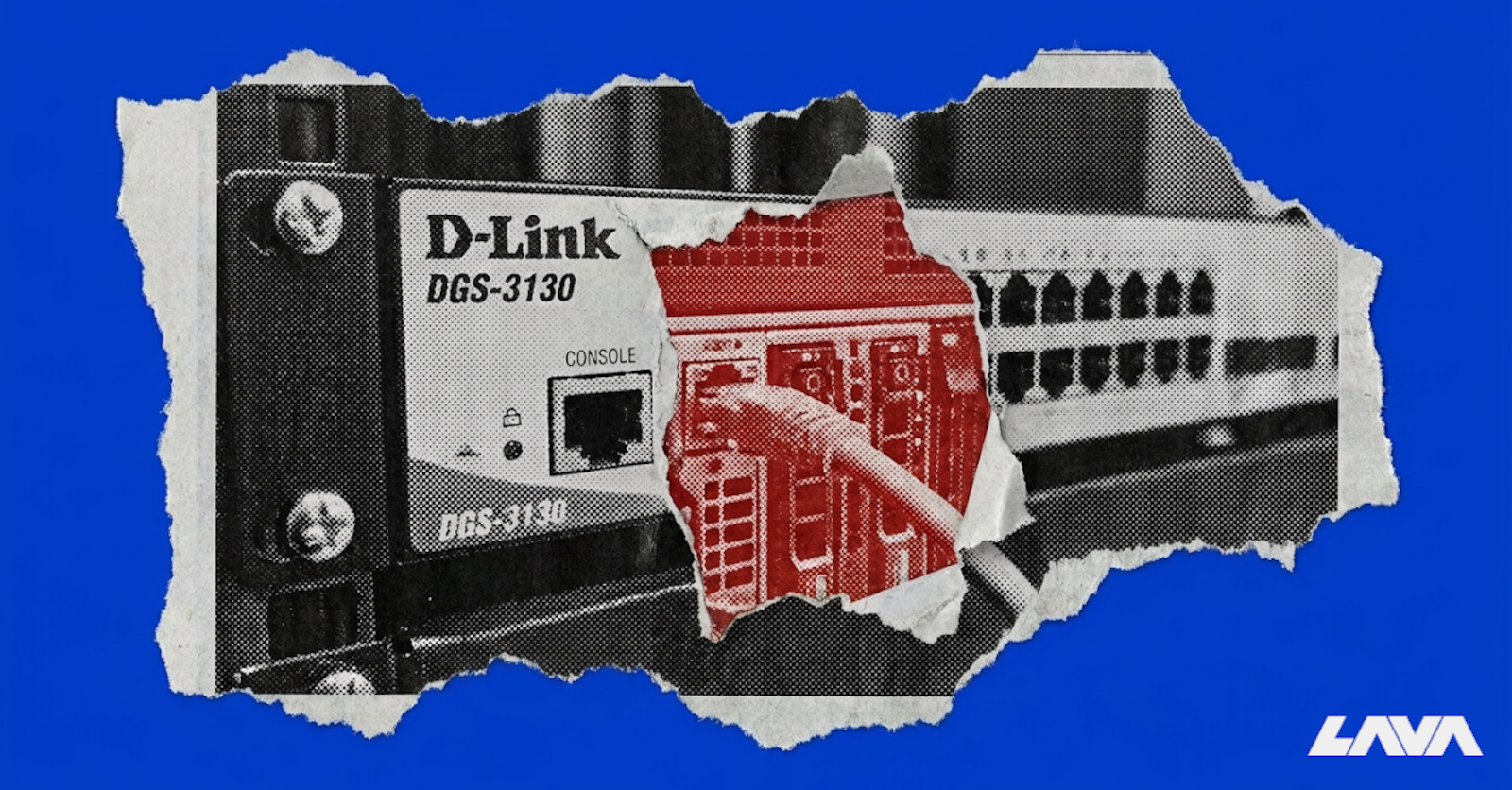
On November 6, 2026, D-Link disclosed multiple vulnerabilities affecting its DGS-3130-30TS managed switch, hardware revision B1. The reported issues could allow attackers with access to the affected network to obtain sensitive device information, modify administrative credentials or configurations, and disrupt network services.
The vulnerabilities, tracked under advisory SAP10523, affect the D-Link Discovery Protocol (DDP) and parts of the device's firmware security. No corrective firmware is available, and D-Link has not confirmed when a patch will be released.
But the bigger concern isn't just the vulnerabilities themselves. It's what an attacker could potentially reach after compromising a network switch.
The Risk Doesn't Stop at the Switch
Network switches connect critical infrastructure, including servers, storage, and management systems. If an attacker gains control of one, the potential impact depends on how the network is configured and what that switch can access.
Unauthorized configuration changes could disrupt connectivity across critical systems. If the compromised switch also provides a path to sensitive management networks, an attacker might be able to target additional infrastructure.
For infrastructure and security teams, this raises several important questions:
Do we know which switches are deployed, their hardware revisions, and what firmware they're running?
Can tenant workloads or other unauthorized systems reach their management interfaces?
Are ACLs and network segmentation configured correctly, and do they actually prevent unauthorized access?
If a switch is compromised, what other infrastructure could be affected?
A vulnerable switch with properly isolated management access presents a different risk from one reachable by untrusted workloads.
Protecting What You Can't Patch
Until corrective firmware becomes available, D-Link recommends:
Disabling DDP globally and on applicable interfaces.
Removing default or unnecessary SNMP community strings.
Restricting SSH, web management, and SNMP access to authorized management systems.
Monitoring for unexpected configuration changes and maintaining configuration backups.
Disabling DDP prevented the attack vectors tested by the researcher, but it does not address the other reported firmware weaknesses. D-Link also warns that management access controls or VLAN separation alone may not be sufficient to mitigate the DDP issues.
This makes it essential to identify affected devices, understand their exposure, and continuously verify that access controls and network segmentation prevent unauthorized access. As infrastructure configurations change, security controls must be validated again.
The Risk You Can't See
The D-Link findings highlight a broader challenge: patching alone isn't enough, especially when no fix is available.
For infrastructure and security teams, protecting vulnerable devices requires more than applying security controls. It requires visibility into network infrastructure, an understanding of how devices are exposed, and continuous validation that those controls are actually working.
Lava provides an end-to-end view across networking, compute, storage, and management, helping teams identify misconfigurations, isolation gaps, and potential attack paths before they put other infrastructure at risk.